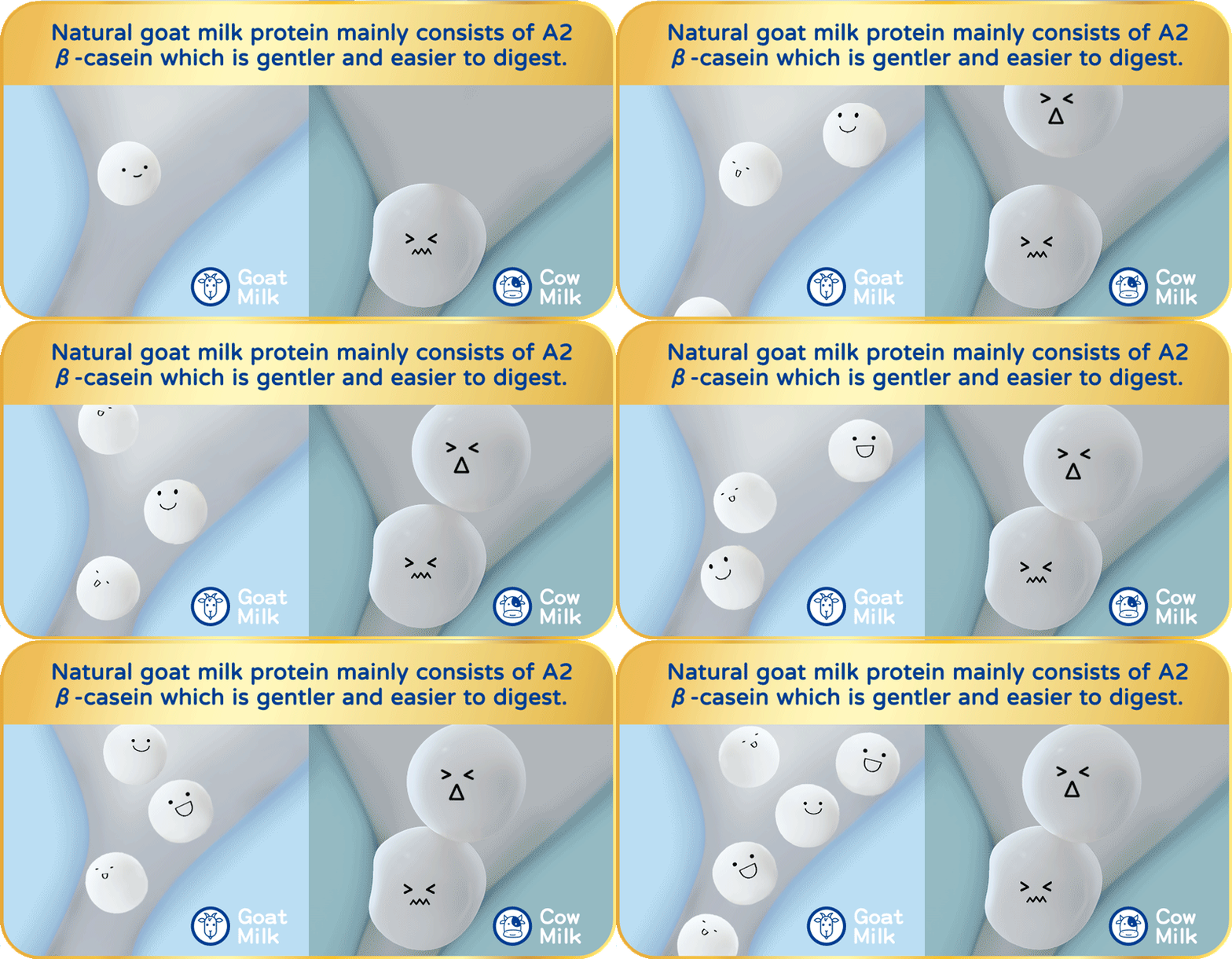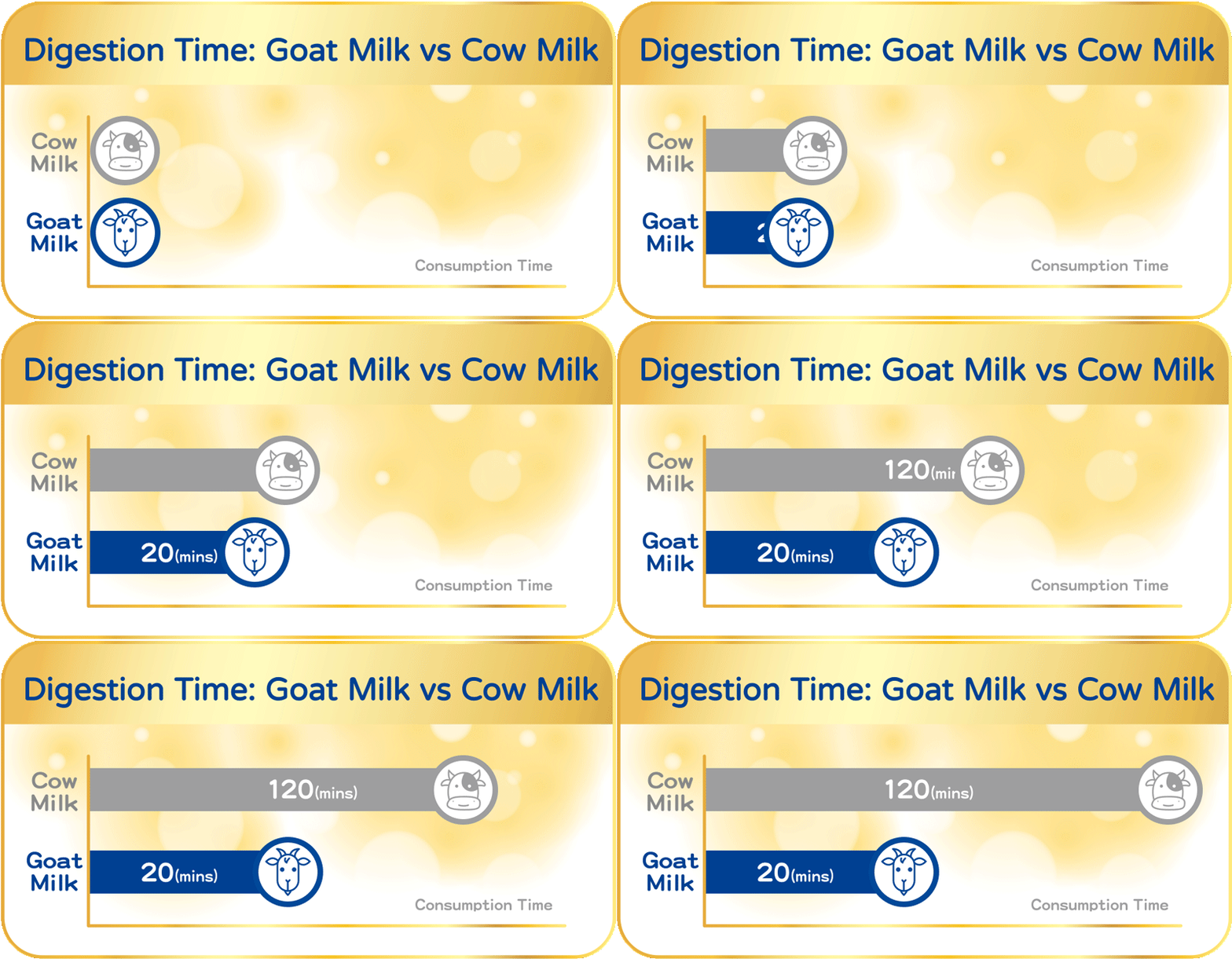


Safe and high quality, and easy to digest

Improved gut health


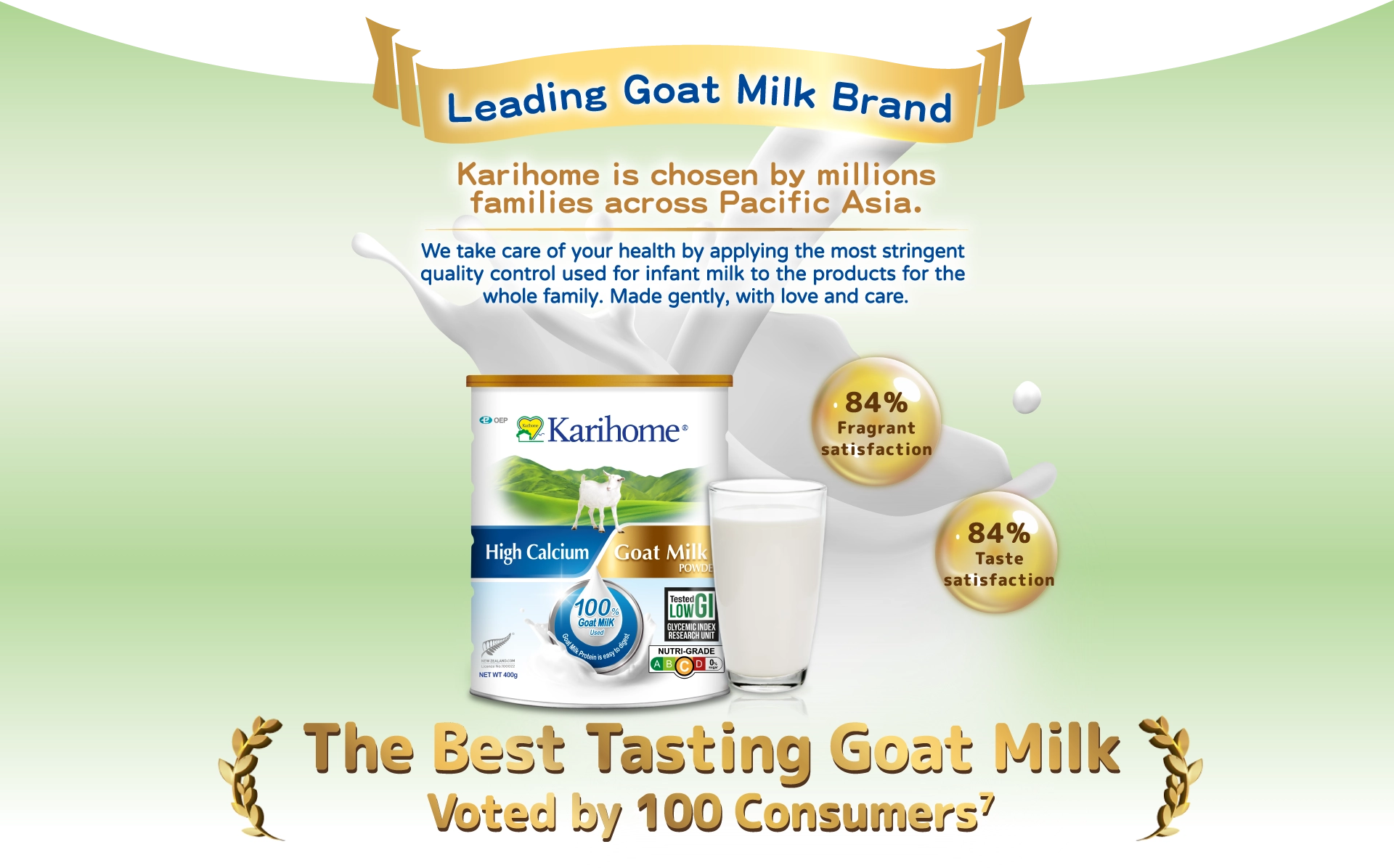
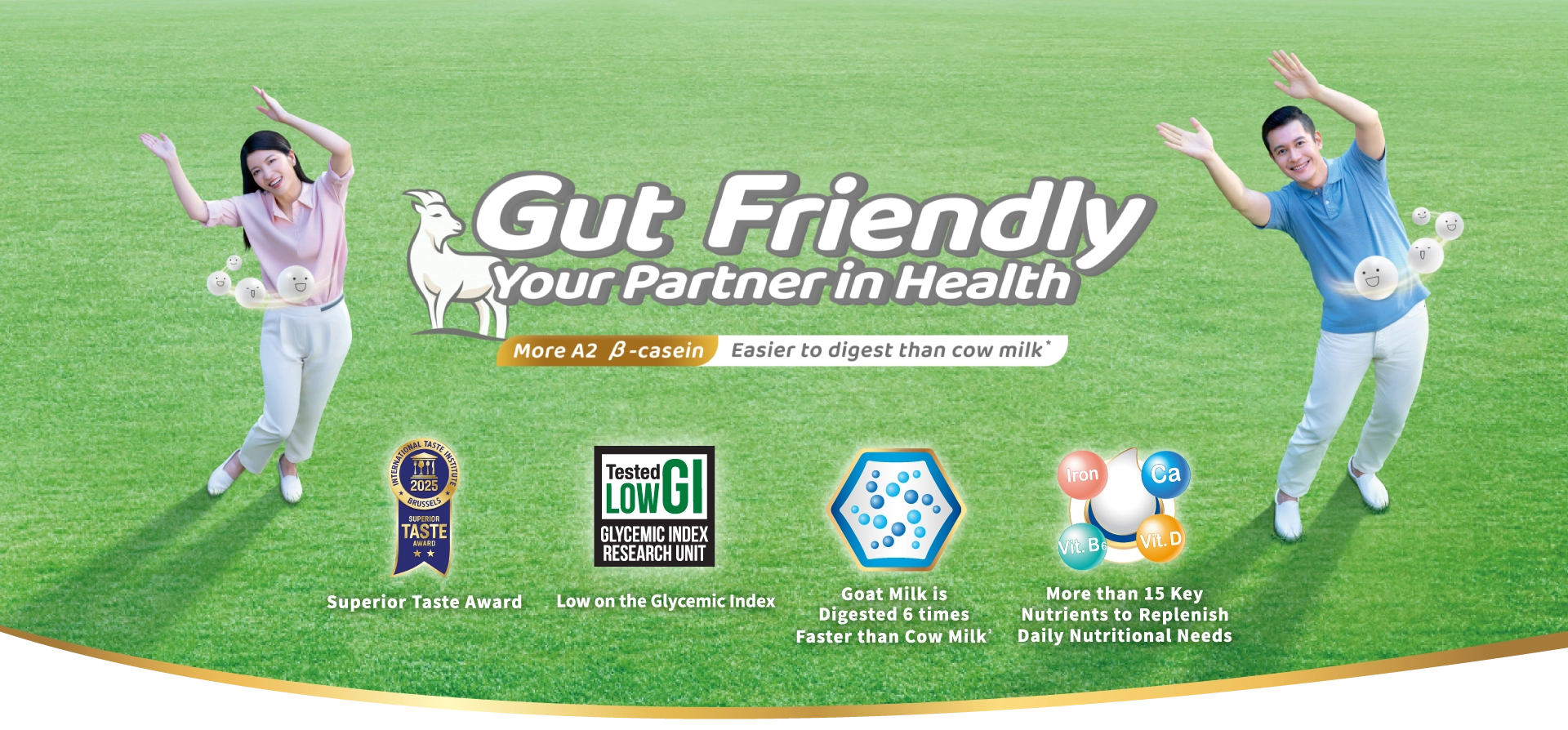
*Goat milk's casein is mainly A2 ß type and cow milk's is A1+A2 ß type. The digestion speed is compared with those two types of protein. 1.Recent Advances in Digestion, Absorption and Allergenicity of Goat's Milk 2012 2.Exclusive Goat Milk brand Winner with the Superior Taste Award 3.J Sci Food Agric 2010; 90 : 112 - 116 Goat milk contains CPP, which helps with calcium, trace elements, selenium, etc., and its utilization rate is about 30% higher than that of cow's milk. 4.J Sci Food Agric 2010; 90 : 112 - 116 Goat milk contains CPP, which helps with calcium, trace elements, selenium, etc., and its utilization rate is about 30% higher than that of cow's milk. 5.Centre Testing International Report, 2021. 6.AgResearch Limited Ruakura Research Centre, New Zealand, 2003. 7.Viewpoint held a blind test comparison survey of goat milk powder among 100 consumers over 50 years old in 2016. 8.GI Study Report, Glycemic Index Research Unit, Temasek Analytical Services Facility, 2024 9.Glycemic Index of Dairy Foods Complete Chart, Glycemic Index Guide, 2024 **The ingredient introduction provided on the website is compiled from relevant academic documents and is for consumer reference only. Any health information on this site is for reference only, and the effects of consumption may vary depending on individual physique.















Safe and high quality, and easy to digest


Improved gut health


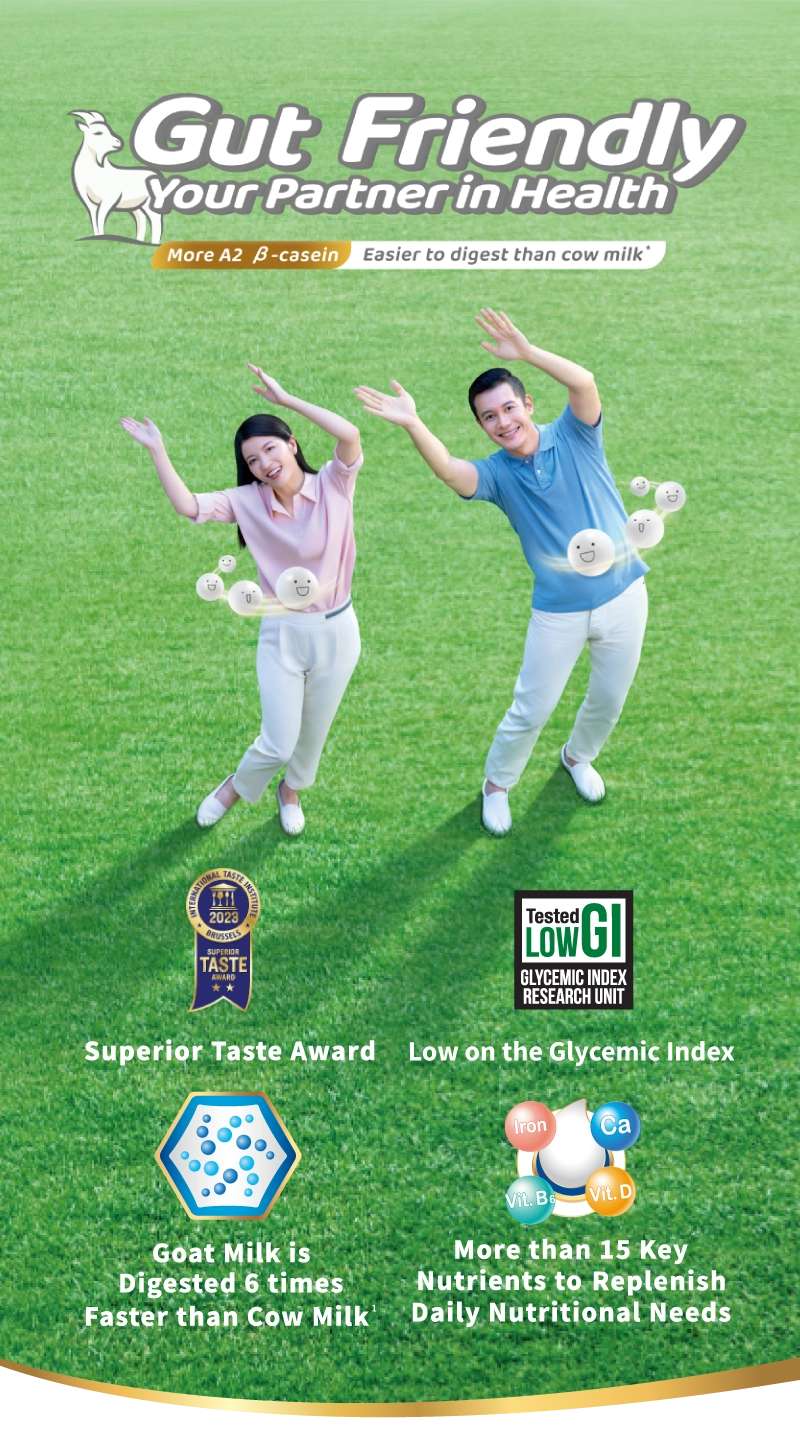
*Goat milk's casein is mainly A2 ß type and cow milk's is A1+A2 ß type. The digestion speed is compared with those two types of protein. 1.Recent Advances in Digestion, Absorption and Allergenicity of Goat's Milk 2012 2.Exclusive Goat Milk brand Winner with the Superior Taste Award 3.J Sci Food Agric 2010; 90 : 112 - 116 Goat milk contains CPP, which helps with calcium, trace elements, selenium, etc., and its utilization rate is about 30% higher than that of cow's milk. 4.J Sci Food Agric 2010; 90 : 112 - 116 Goat milk contains CPP, which helps with calcium, trace elements, selenium, etc., and its utilization rate is about 30% higher than that of cow's milk. 5.Centre Testing International Report, 2021. 6.AgResearch Limited Ruakura Research Centre, New Zealand, 2003. 7.Viewpoint held a blind test comparison survey of goat milk powder among 100 consumers over 50 years old in 2016. 8.GI Study Report, Glycemic Index Research Unit, Temasek Analytical Services Facility, 2024 9.Glycemic Index of Dairy Foods Complete Chart, Glycemic Index Guide, 2024 **The ingredient introduction provided on the website is compiled from relevant academic documents and is for consumer reference only. Any health information on this site is for reference only, and the effects of consumption may vary depending on individual physique.

Karihome Formula Milk is produced by Dairy Goat Cooperative (DGC), established from the amalgamation of small goat milk co-operatives around New Zealand. DGC has end to end production facilities on its site in Hamilton, New Zealand.
Milk is collected from their farms and delivered directly to the production facility. Great care is taken to ensure a consistently lower temperature at all times by insulating their milk trucks. This helps maintain the nutritional integrity of the goat milk at all times during transit.
When the whole goat milk is delivered to the site it is checked again for quality before it is processed.
The milk that enters the DGC facility leaves as goat milk formula, in the can that is then sold to Karihome customers. To ensure the safest possible production system, every element of the production is managed within a single site.
The DGC plant is purpose-built solely to be a world class facility for manufacturing goat milk formula. Combined with the cooperative farm model, there is full control in the entire process from milking to distribution. So milk that comes into the plant leaves as a completed product.
The result is a safer, cleaner manufacturing process with no third parties.
It is not recommended that children aged less than 12 months be fed unmodified goat milk. Neither should they be fed unmodified cow milk. Unmodified milk is not suitable for infants younger than 12 months as the high mineral and protein content may place undue stress on the infant’s kidneys. Unmodified milk also lacks an adequate amount of various nutrients to support an infant’s nutritional requirements.
For this reason, goat milk formula is manufactured using fresh goat milk and is formulated to meet internationally accepted formula standards for babies and young children. Goat formula has extra lactose, essential fatty acids, vitamins such as folate, minerals such as iron and other nutrients such as taurine to meet the nutritional needs of young children.
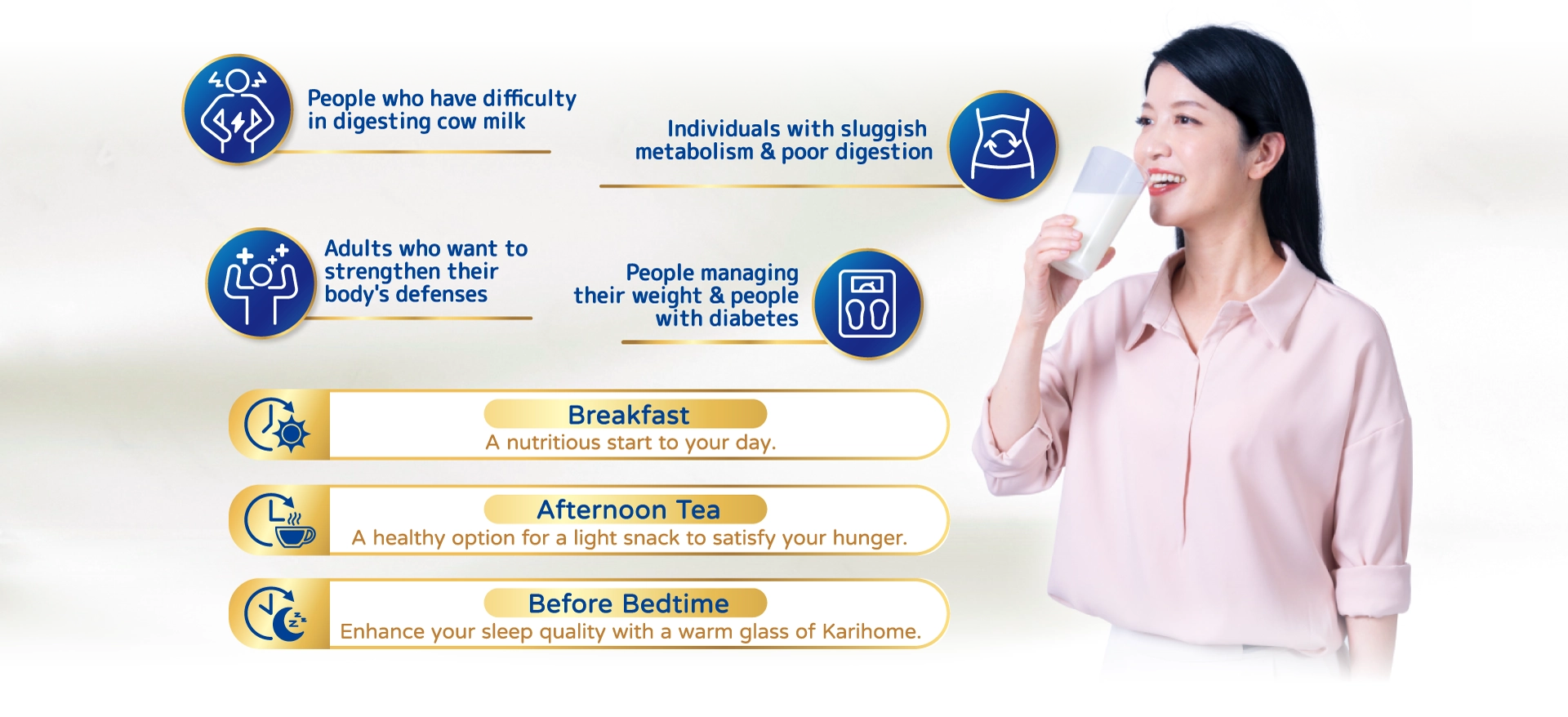
No, goat milk is not heaty. Goat milk is very easy to digest and absorb. The natural oligosaccharides in goat milk promote the growth of good bacteria in the body, which may help in bowel movement.
The transition from breast milk or formula to solid foods is one of the most common times for toddlers to have hard stools because the digestive system needs time to adapt.
As every toddler’s stool texture and pattern is different. What may seem regular for your toddler may be different from another toddler.
It is important for toddlers to drink enough fluids to keep their bodies properly hydrated and bowels moving regularly. When increasing the amount of fiber in your toddler’s diet, it is important to keep increasing the amount of water to help process the added fiber.
It is normal for your baby's weight to drop after birth as his/her body loses the excess fluid he/she took in while he/she was bathed in amniotic fluid in your womb. Around one week after birth, your baby's body weight should start to increase. Around two weeks after birth, your baby will recover to his/her birth weight. In the first three months, if your baby is gaining more than 120g weekly, you can be sure that he/she is having enough milk. You may refer to the Health Booklet for the growth charts for weight, height and head circumference for age.

What does the percentile on the growth charts mean?
The percentile for each measurement item indicates how your child's measurement compares with others in the same age-group for that measurement item. For example, if the height percentile for your child's measurement is shown as 75% - this indicates that your child is as tall as or taller than 75% of children in the same age-group, whereas if the height percentile is shown as 10% - this indicates that your child is as tall as or taller than only 10% of children in the same age-group. The same applies for the percentiles for the weight or head circumference.
As children grow, the physical growth of height, weight and organs occur. They develop changes, progression and maturation of vision, auditory sense, motor skill development, cognition, speech, communication, emotion, social adaptation etc. When the children are growing physically, their nerves and intelligence are also developing at the same time, which reflects in behavioral and emotional aspects like cognition, speed, motor skills, and social adaptability; developmental milestones are established. When the development of a child is delaying in one or more milestones, it is called developmental delay.
https://www.healthxchange.sg/children/baby-0-24-months/baby-development-milestones-1-6-months
https://www.healthxchange.sg/children/baby-0-24-months/baby-development-milestones-7-12-months
If my child is not meeting the milestone, what should I do?
You should seek the advice of your healthcare professionals during the scheduled developmental assessment of your child.
Reference: BabyCentre UK; HealthHub
If the baby shows above signs of "fullness", you or caregiver should stop feeding. Let your baby decide how much he or she wants to drink.
Reference: Ministry of Social and Family Development